
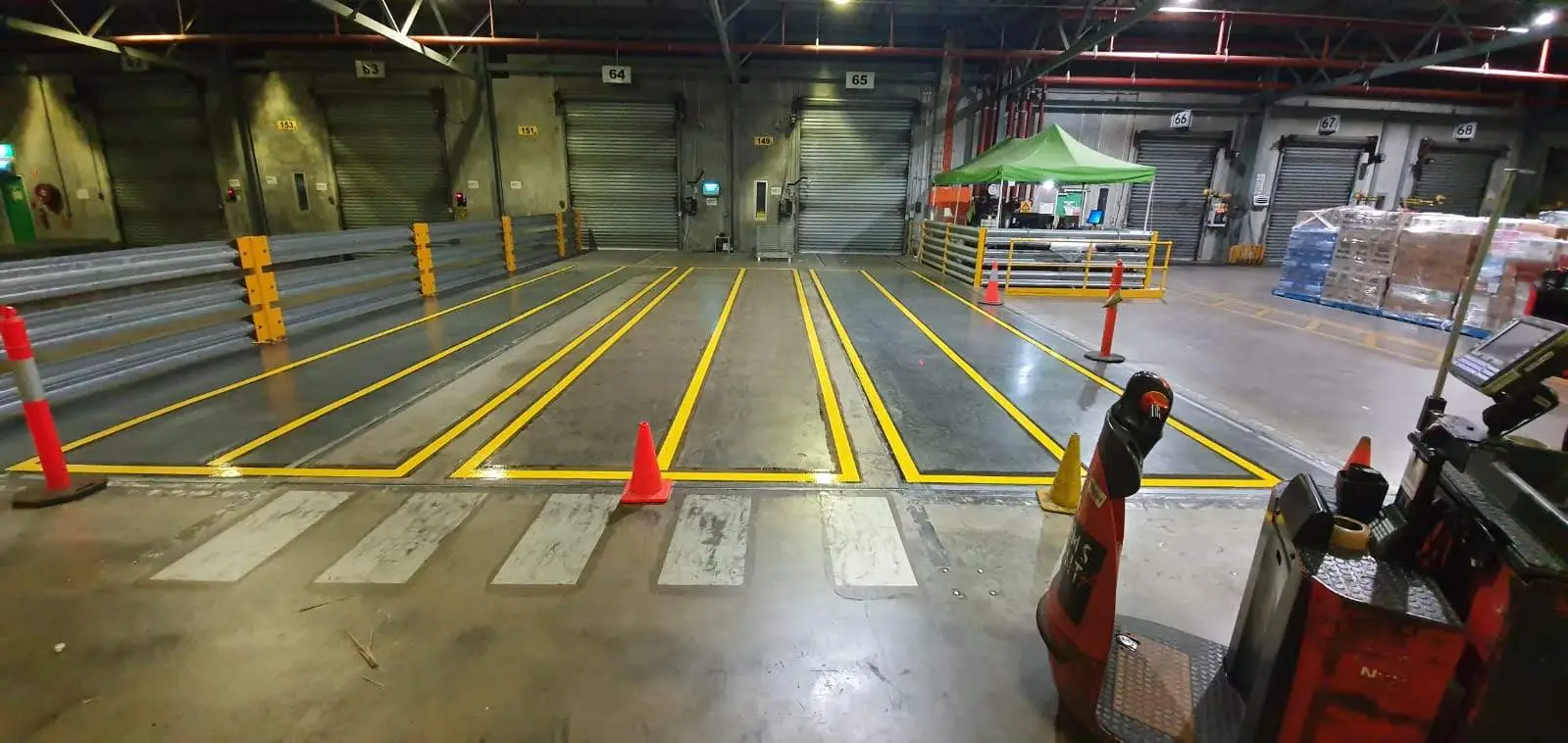
When most people think about line marking, they picture someone with a paint machine drawing lines on the ground. But there's a massive difference between simply painting lines and creating a logical line marking system that transforms how a facility operates. In this comprehensive guide, we'll explore what makes line marking "logical," why it matters, and how strategic layout design delivers measurable improvements in safety, efficiency, and cost savings.
📋 Table of Contents
What Is Logical Line Marking?
Logical line marking is a strategic approach to facility layout design that goes far beyond simply painting lines on floors or pavements. It's about creating an intelligent system that guides traffic, defines spaces, and communicates safety information in a way that makes intuitive sense to everyone who uses the facility.
Unlike traditional line marking, which often involves replicating existing patterns or following basic templates, logical line marking requires:
- Comprehensive site analysis – Understanding how your space is actually used
- Traffic pattern assessment – Mapping vehicle and pedestrian movements
- Workflow optimization – Aligning markings with your operational processes
- Safety compliance – Meeting Australian Standards and OH&S requirements
- Future flexibility – Planning for growth and changes
💡 Key Insight
The difference between regular line marking and logical line marking is like the difference between drawing a map and designing a navigation system. One shows where things are; the other guides people efficiently and safely from point A to point B.
Why Logical Line Marking Matters
Poor line marking doesn't just look unprofessional—it creates real operational problems. When markings are illogical, confusing, or poorly planned, facilities experience:
- Safety incidents – Unclear traffic patterns lead to collisions and near-misses
- Operational bottlenecks – Congestion in high-traffic areas slows everything down
- Confusion and delays – Staff waste time navigating poorly marked spaces
- Compliance violations – Failure to meet safety standards results in fines
- Wasted space – Inefficient layouts leave valuable floor space unused
Conversely, logical line marking creates an environment where safety and efficiency happen naturally. When done properly, it becomes infrastructure that works invisibly in the background—people don't even think about it, they just flow through the space efficiently.
The Three Pillars of Logical Line Marking
Pillar 1: Enhanced Safety
Safety is always the top priority in any facility. Logical line marking enhances safety by creating clear, predictable traffic patterns that separate hazards and guide people away from danger.
How Logical Line Marking Improves Safety:
- Segregated traffic zones – Clearly defined lanes keep pedestrians and vehicles apart
- Hazard identification – High-visibility markings warn of dangerous areas
- Emergency wayfinding – Evacuation routes are instantly recognizable
- Equipment boundaries – Safe operating zones prevent accidents
- Reduced conflict points – Smart layout design eliminates dangerous intersections
In warehouses and factories, the most common serious incidents involve forklifts and pedestrians. A logical line marking system creates dedicated walkways, clearly marked crossing points, and visible warning zones that dramatically reduce these risks.
Pillar 2: Operational Efficiency
Beyond safety, logical line marking has a direct impact on how efficiently your facility operates. By aligning markings with your actual workflows, you can eliminate bottlenecks, reduce travel time, and streamline processes.
Efficiency Improvements From Logical Line Marking:
- Optimized material flow – Products move smoothly from receiving to dispatch
- Reduced travel distances – Strategic placement minimizes unnecessary movement
- Faster loading/unloading – Clear bay markings and traffic patterns speed up operations
- Improved space utilization – Every square meter is used effectively
- Easier staff training – Intuitive layouts reduce onboarding time
Manufacturing facilities that implement logical line marking often report significant improvements in production cycle times. When raw materials, work-in-progress, and finished goods all have clearly defined paths and storage zones, the entire production process flows more smoothly.
Pillar 3: Long-Term Cost Savings
While logical line marking requires upfront investment in planning and design, it delivers substantial cost savings over time through multiple channels:
- Fewer accidents – Reduced incident rates mean lower insurance premiums and worker's compensation claims
- Less equipment damage – Proper traffic management prevents collisions that damage forklifts, racking, and vehicles
- Reduced downtime – Fewer incidents and more efficient workflows mean more productive hours
- Avoided expansion costs – Better space utilization can delay or eliminate the need for facility expansion
- Compliance confidence – Proper marking reduces risk of regulatory fines and mandated corrections
- Extended marking lifespan – Strategic planning and quality materials mean less frequent re-marking
Real-World Examples & Measurable Results
Let's look at three actual scenarios where logical line marking delivered tangible improvements:
The Challenge
A 15,000m² distribution centre in Brisbane was experiencing serious operational issues. Forklift traffic frequently congested near loading docks, pedestrian staff were regularly in danger zones, and pick rates were 20-30% below industry benchmarks. The facility had grown organically over 15 years, and the line marking reflected that chaos—multiple layers of faded lines pointing in different directions.
The Solution
After comprehensive traffic analysis, we redesigned the entire facility flow. Key changes included:
- Converting main aisles to one-way traffic to eliminate congestion
- Creating dedicated pedestrian corridors with high-visibility markings
- Implementing color-coded zones aligned with their warehouse management system
- Establishing clear loading dock traffic patterns with approach lanes
- Designating staging areas for WIP and outbound goods
The Results
The Challenge
A manufacturing plant producing automotive components had production bottlenecks caused by unclear material flow. Raw materials, work-in-progress, and finished goods all competed for the same floor space and pathways, creating confusion and inefficiency.
The Solution
We worked with production managers to map the entire manufacturing process, then designed a logical layout:
- Color-coded zones for different production stages (blue for raw materials, yellow for WIP, green for finished goods)
- Dedicated pathways for each material type to prevent crossing
- Clear boundaries for each assembly station and quality control point
- Designated storage areas at strategic points in the production flow
The Results
The Challenge
A major Gold Coast shopping centre received numerous customer complaints about confusing traffic flow, difficulty finding parking, and congestion during peak hours. The car park had been expanded twice without comprehensive redesign, resulting in inconsistent markings and unclear directions.
The Solution
Complete car park flow redesign including:
- Clear directional arrows creating logical one-way flow patterns
- Color-coded parking zones (Level 1 Blue, Level 2 Green, etc.) for easy wayfinding
- High-visibility pedestrian crossing points at strategic locations
- Clear accessible parking zones near elevators and entries
- Improved signage integration with line marking
The Results
The Logical Line Marking Planning Process
Creating an effective logical line marking system requires a structured approach. Here's how the planning process typically unfolds:
Step 1: Comprehensive Site Assessment
The process begins with detailed analysis of your current situation:
- Facility measurements and layout documentation
- Traffic flow observation during normal operations
- Identification of current bottlenecks and problem areas
- Review of incident reports and safety concerns
- Assessment of existing line marking condition and effectiveness
Step 2: Stakeholder Consultation
Understanding your operations requires input from people who work in the space daily:
- Meetings with facility managers and operations teams
- Discussions with health and safety officers
- Input from equipment operators and warehouse staff
- Understanding of future growth plans and operational changes
Step 3: Strategic Design Development
With comprehensive information gathered, the design phase begins:
- Creating optimized traffic flow patterns
- Defining zones for different activities and materials
- Establishing safety zones and hazard markings
- Ensuring compliance with Australian Standards (AS 2890, OH&S regulations)
- Planning for flexibility and future modifications
Step 4: Design Review and Refinement
The proposed design is presented to stakeholders for feedback:
- Detailed layout plans with color coding and specifications
- Walkthrough of traffic patterns and operational flow
- Discussion of potential challenges or concerns
- Adjustments based on practical operational knowledge
Step 5: Phased Implementation
Installation is carefully planned to minimize operational disruption:
- Coordination with operational schedules
- After-hours or weekend work when appropriate
- Phased completion allowing continued facility use
- Quality assurance at each stage
Step 6: Post-Implementation Review
After installation, the system is monitored and refined:
- Observation of traffic patterns with new markings
- Gathering feedback from facility users
- Minor adjustments if needed
- Documentation for future reference and maintenance
Common Line Marking Mistakes to Avoid
Learning from others' mistakes can save time and money. Here are the most common line marking errors we see:
1. Replicating Old Patterns Without Analysis
Many facilities simply repaint their existing lines without questioning whether the current layout still makes sense. Operations evolve, equipment changes, and workflows shift—but the line marking often stays the same for decades. This is the easiest mistake to make and often the most costly.
2. Ignoring Actual Traffic Patterns
Line marking should reflect how people and vehicles actually move through your space, not how someone thinks they should move. Observing real traffic patterns during normal operations is essential for creating a system people will naturally follow.
3. Using Inadequate Colors or Visibility
Saving money on paint quality or using colors that don't provide sufficient contrast leads to markings that fade quickly or are difficult to see in varying light conditions. This defeats the entire purpose of line marking.
4. Failing to Consider Future Needs
A line marking system designed only for today's operations may become obsolete quickly. Building in flexibility for layout changes, seasonal variations, or future expansion prevents costly do-overs.
5. Neglecting Stakeholder Input
The people who work in your facility every day have invaluable knowledge about what works and what doesn't. Designing line marking without their input often results in systems that look good on paper but fail in practice.
6. Overlooking Compliance Requirements
Australian Standards for car parks, OH&S regulations for warehouses, and industry-specific requirements all impact line marking design. Non-compliance can result in fines and, more importantly, increased safety risks.
Getting Started With Logical Line Marking
If you're considering implementing or updating your facility's line marking, here's how to begin:
Assess Your Current Situation
Start by honestly evaluating your existing line marking:
- Are there areas of frequent congestion or confusion?
- Do safety incident reports suggest line marking issues?
- Has your facility layout or operations changed since the last marking?
- Are your markings faded, damaged, or difficult to follow?
- Do employees regularly deviate from marked pathways?
Document Your Requirements
Gather information that will help plan an effective system:
- Facility plans and measurements
- Current operational workflows
- Safety incident history
- Future growth or modification plans
- Specific compliance requirements for your industry
Engage Professional Expertise
While it might be tempting to take a DIY approach, logical line marking requires specialized knowledge of traffic flow design, safety standards, materials science, and application techniques. Professional line marking companies with experience in facility optimization bring valuable expertise to the planning process.
💡 Professional Tip
The best time to implement logical line marking is during facility maintenance shutdowns, major equipment installations, or operational changes. These periods provide natural opportunities to rethink your layout without creating additional disruption.
Conclusion: Line Marking as Infrastructure Investment
Logical line marking represents a fundamental shift in how we think about facility layout. Rather than viewing it as a cosmetic touch-up or regulatory requirement, it should be seen as critical infrastructure that enables your operations to function safely and efficiently.
The facilities that embrace logical line marking gain competitive advantages: faster operations, fewer incidents, better space utilization, and lower long-term costs. Those that continue with ad-hoc, reactive line marking will struggle with the inefficiencies, safety risks, and operational friction that poor layouts create.
Whether you operate a warehouse, manufacturing plant, car park, or any other facility where traffic flow and safety matter, investing in a properly planned logical line marking system delivers returns that compound over years. It's not just about painting lines—it's about creating an environment where safety and efficiency happen naturally.