
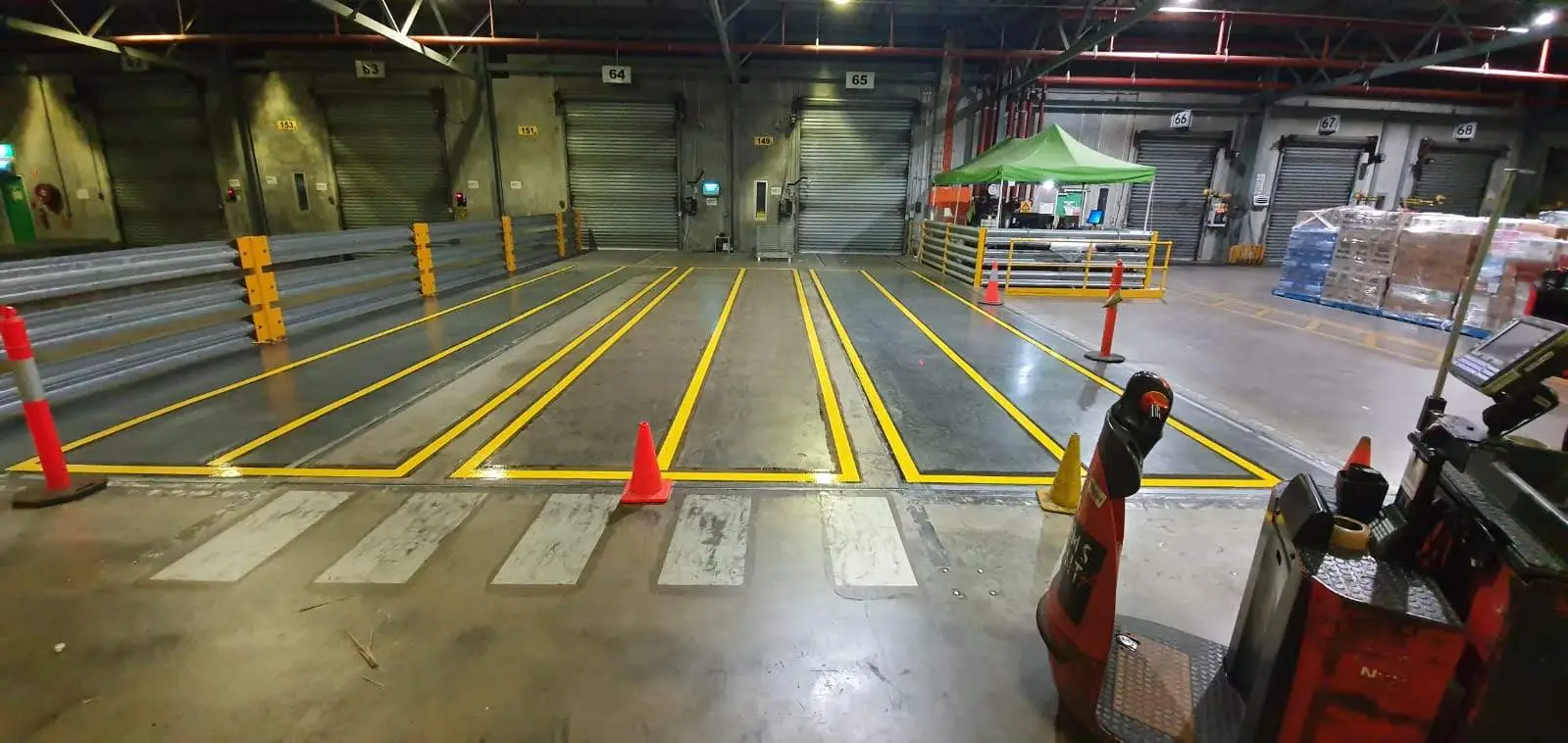
Line marking paint is an essential component for creating clear and long-lasting lines in various settings, including roadways, sports fields, car parks, and industrial facilities. Its quality and durability directly impact safety, usability, and long-term value. Investing in high-quality line marking paint ensures that these markings remain visible and effective over time, reducing maintenance costs and enhancing the professional appearance of your facility. In this comprehensive guide, we'll explore everything you need to know about selecting, applying, and maintaining line marking paints for optimal results.
📋 Table of Contents
- Why Paint Quality Matters
- Types of Line Marking Paints
- Factors Affecting Durability
- Choosing Paint for Different Surfaces
- Brisbane & Queensland Climate Considerations
- Application Methods & Best Practices
- Benefits of Premium Line Marking Paint
- Cost Analysis: Premium vs. Budget Paint
- Apex's Approach to Paint Selection
Why Paint Quality Matters in Line Marking
When it comes to line marking, paint quality is not just about aesthetics—it's about safety, compliance, longevity, and long-term cost effectiveness. Understanding why quality matters helps justify the investment in premium materials.
The Critical Role of Line Marking Paint
- Safety communication: Clear, visible lines guide traffic and warn of hazards—faded markings compromise safety
- Regulatory compliance: Australian Standards require markings to maintain specific visibility and reflectivity levels
- Professional appearance: Well-maintained facilities reflect positively on your business
- Operational efficiency: Clear markings reduce confusion and improve traffic flow
- Liability protection: Proper markings demonstrate duty of care and reduce legal exposure
💡 The True Cost of Cheap Paint
Budget line marking paint might save $200 on the initial job, but when it fades within 6-12 months instead of lasting 3-5 years, you'll spend thousands more over time on frequent re-marking. Additionally, the period of degraded visibility creates safety risks and compliance concerns. Premium paint is always the more affordable option when you consider total cost of ownership.
What Defines Quality Line Marking Paint?
Not all line marking paints are created equal. Quality paint demonstrates specific characteristics:
- High pigment concentration: Provides opacity and vibrant color that resists fading
- Durable binders: Ensures paint adheres firmly to surfaces and resists wear
- UV stabilizers: Protects against Queensland's intense sunlight
- Fast-drying formulation: Reduces disruption and prevents tracking
- Appropriate viscosity: Allows for smooth application without running or pooling
- Chemical resistance: Withstands exposure to oils, fuels, and cleaning chemicals
- Reflective capabilities: Maintains visibility in low-light conditions when required
Types of Line Marking Paints
Understanding the different types of line marking paints and their characteristics helps you make informed decisions for your specific application.
1. Water-Based Acrylic Paints
Water-based acrylic paints are the most commonly used line marking materials for car parks, warehouses, and sports facilities across Brisbane and South East Queensland.
Characteristics:
- Base: Water as the primary solvent
- Drying time: 15-30 minutes in good conditions
- Application temperature: 10-35°C optimal
- Odor: Low odor, suitable for indoor use
- VOC content: Low environmental impact
- Expected lifespan: 2-4 years depending on traffic
✓ Advantages
- Environmentally friendly with low VOC emissions
- Safe for indoor applications
- Easy cleanup with water
- Good color range and brightness
- Cost-effective for most applications
- Fast drying in Brisbane's warm climate
- Good adhesion on most surfaces
✗ Limitations
- Sensitive to moisture during application and curing
- Shorter lifespan than solvent-based alternatives
- Can be affected by surface dampness
- May require more frequent reapplication in high-traffic areas
- Less chemical resistant than some alternatives
Best Applications:
- Shopping centre car parks
- Office building parking
- Indoor warehouse markings
- Sports courts (tennis, basketball, netball)
- School playgrounds and car parks
- Residential strata parking
Popular Brands:
Dulux Roadmaster A1 is the industry standard in Brisbane, offering excellent UV resistance, durability, and color retention specifically formulated for Australian conditions.
2. Solvent-Based Alkyd Paints
Solvent-based paints use chemical solvents as their base and offer superior durability and chemical resistance compared to water-based alternatives.
Characteristics:
- Base: Petroleum-based solvents
- Drying time: 30-60 minutes
- Application temperature: 5-40°C
- Odor: Strong chemical odor, ventilation required
- VOC content: Higher environmental impact
- Expected lifespan: 3-6 years depending on traffic
✓ Advantages
- Exceptional durability and wear resistance
- Superior chemical resistance
- Excellent adhesion to oily or contaminated surfaces
- Can be applied in cooler or more humid conditions
- Longer lifespan reduces reapplication frequency
- Deep, rich colors with excellent retention
✗ Limitations
- Strong odor limits indoor use
- Higher VOC emissions (environmental concerns)
- Requires solvent cleanup
- More expensive than water-based options
- Longer drying time can increase disruption
- Disposal regulations more stringent
Best Applications:
- Industrial facilities with chemical exposure
- High-traffic commercial car parks
- Fuel station forecourts
- Loading docks and heavy vehicle areas
- Outdoor markings in challenging conditions
- Areas where maximum durability is critical
3. Thermoplastic Markings
While technically not paint, thermoplastic is a popular line marking material that offers exceptional durability for high-traffic applications.
Characteristics:
- Material: Plastic resin with pigments and glass beads
- Application: Heated to 180-220°C and applied molten
- Drying time: Cools and hardens in 5-15 minutes
- Thickness: 2-3mm (much thicker than paint)
- Reflectivity: Excellent with embedded glass beads
- Expected lifespan: 5-8 years in heavy traffic
✓ Advantages
- Exceptional durability and longevity
- Superior reflectivity for night visibility
- Resistant to wear, chemicals, and weather
- Raised profile provides tactile feedback
- Very low maintenance requirements
- Cost-effective over long term despite higher initial cost
✗ Limitations
- Significantly higher initial cost
- Requires specialized equipment and expertise
- Not suitable for all surface types
- Difficult to remove if layout changes needed
- Limited color options compared to paint
- Not appropriate for temporary markings
Best Applications:
- Public roads and highways
- Major intersections and roundabouts
- Pedestrian crossings
- High-traffic car park areas
- School zones and safety areas
- Airport taxiways and runways
4. Two-Component Epoxy Paints
Epoxy paints are premium, high-performance coatings ideal for demanding environments requiring maximum durability and chemical resistance.
Characteristics:
- System: Two-part system (resin + hardener)
- Drying time: 1-4 hours depending on formulation
- Full cure: 24-72 hours for maximum hardness
- Application complexity: Requires precise mixing and skilled application
- Pot life: Limited working time after mixing (30-60 minutes typical)
- Expected lifespan: 4-7 years in demanding conditions
✓ Advantages
- Exceptional chemical and solvent resistance
- Superior abrasion resistance
- Excellent adhesion to prepared surfaces
- Very hard, durable finish
- Resistant to UV degradation
- Ideal for extreme environments
✗ Limitations
- Most expensive paint option
- Complex mixing and application requirements
- Limited pot life requires efficient work
- Longer cure times increase disruption
- Requires excellent surface preparation
- Professional application essential
Best Applications:
- Chemical processing facilities
- Manufacturing plants with aggressive environments
- Food processing facilities (food-safe formulations)
- Pharmaceutical manufacturing
- High-traffic warehouse aisles
- Areas requiring maximum durability and chemical resistance
Factors Affecting Line Marking Paint Durability
The durability of line marking paint is influenced by several interconnected factors. Understanding these helps set realistic expectations and make informed decisions about paint selection and maintenance.
☀️ UV Exposure & Sunlight
Brisbane's intense Queensland sun is one of the primary factors degrading line marking paint. UV radiation breaks down paint binders and causes pigments to fade. Premium paints with UV inhibitors last 3-5x longer than budget alternatives in full sun exposure.
🚗 Traffic Volume
The amount and type of traffic significantly impacts paint lifespan. Heavy vehicles cause more wear than light cars. A busy shopping centre car park may need remarking every 2-3 years, while a lightly-used office park may last 5+ years with the same paint.
🌧️ Weather & Moisture
Brisbane's subtropical climate with high rainfall and humidity affects paint durability. Water can penetrate poorly-adhered paint, causing peeling. Quality paints formulated for Queensland conditions resist moisture penetration and maintain adhesion.
🏗️ Surface Type & Condition
Paint adheres differently to asphalt vs. concrete. Smooth, dense surfaces provide better adhesion than porous or damaged ones. Proper surface preparation is crucial—paint applied to a poorly-prepared surface will fail prematurely regardless of quality.
🧪 Chemical Exposure
Oils, fuels, cleaning chemicals, and de-icing compounds can degrade paint. Industrial facilities and fuel stations require chemical-resistant formulations. Even car park markings face oil drips and cleaning product exposure.
🎨 Application Quality
Even premium paint fails if applied incorrectly. Proper thickness, correct ambient conditions, adequate drying time, and skilled technique all impact longevity. Professional application ensures paint performs to its potential.
Expected Lifespan by Application & Traffic
| Application Type | Traffic Level | Water-Based Acrylic | Solvent-Based | Thermoplastic |
|---|---|---|---|---|
| Car Park | Light | 3-4 years | 4-6 years | 6-8 years |
| Car Park | Heavy | 2-3 years | 3-5 years | 5-7 years |
| Warehouse | Forklift Traffic | 1-2 years | 2-4 years | 4-6 years |
| Sports Court | Regular Use | 3-5 years | 4-6 years | Not Applicable |
| Public Road | High Traffic | 6-12 months | 1-2 years | 5-8 years |
Choosing Paint for Different Surfaces
Different surfaces require specific paint formulations for optimal adhesion and durability. Understanding surface characteristics helps select appropriate materials.
Asphalt Surfaces
Characteristics: Porous, petroleum-based, slightly flexible, absorbs some paint, darker color provides good contrast
Best Paint Options:
- First choice: Water-based acrylic formulated for asphalt—provides good adhesion and flexibility
- High-traffic areas: Solvent-based paint offers superior durability
- Maximum durability: Thermoplastic for roads and heavy-use zones
Preparation Requirements:
- Clean thoroughly to remove oils, dust, and loose material
- Repair cracks and damage before marking
- Allow new asphalt to cure 30-90 days before marking
- Prime if surface is very porous or aged
Concrete Surfaces
Characteristics: Hard, dense, less porous than asphalt, alkaline pH, lighter color may require brighter paints
Best Paint Options:
- Standard choice: Water-based acrylic with good alkaline resistance
- Chemical exposure: Epoxy or solvent-based for maximum resistance
- Indoor facilities: Epoxy floor markings for warehouse aisles
Preparation Requirements:
- Diamond grind or acid etch to create surface profile for adhesion
- Remove oils with degreasers—especially critical on concrete
- Allow new concrete to cure minimum 28 days
- Use primer on very smooth or dense concrete
Indoor vs. Outdoor Considerations
Indoor Applications:
- Odor concerns: Water-based paints strongly preferred
- Ventilation: Low-VOC formulations required
- UV exposure: Minimal, UV resistance less critical
- Weather protection: Extended lifespan due to shelter
- Temperature control: Consistent conditions aid application and curing
Outdoor Applications:
- UV resistance: Critical for color retention and durability
- Weather exposure: Must withstand rain, heat, and humidity
- Temperature fluctuations: Paint must remain flexible
- Reflectivity: Often required for night visibility
- Application conditions: Weather-dependent scheduling
Brisbane & Queensland Climate Considerations
Queensland's subtropical climate presents unique challenges for line marking paint. Understanding these factors helps select appropriate materials and application methods.
Key Climate Factors in Brisbane & SEQ
🌤️ Intense UV Radiation
Brisbane receives some of Australia's highest UV radiation levels. This intense sunlight causes rapid degradation of paints without adequate UV inhibitors. Premium paints with UV stabilizers are essential—budget paints can fade to near-invisibility within 12 months in full sun exposure. The extra cost of UV-resistant paint is recovered many times over through extended lifespan.
Temperature & Humidity Impact
- Summer heat (30-35°C+): Causes paint to dry very quickly, potentially affecting finish quality. Early morning or late afternoon application often best.
- High humidity (60-80%+): Slows drying times and can affect water-based paint adhesion. Extended drying periods may be needed.
- Mild winters (10-20°C): Actually ideal for line marking—cooler temperatures allow proper flow without rapid drying.
- Dew formation: Morning dew on surfaces requires waiting for complete dryness before application.
Rainfall Considerations
- Wet season (Dec-Mar): Heavy afternoon storms require morning application with weather monitoring
- Dry season (Apr-Nov): More reliable conditions for scheduling line marking projects
- Paint curing: Water-based paints need 24-48 hours before heavy rain exposure for proper cure
- Surface moisture: Surfaces must be completely dry—no application within 24 hours of rain
Gold Coast Coastal Considerations
Coastal areas from Southport to Coolangatta face additional challenges:
- Salt air exposure: Accelerates paint degradation, particularly metallic components in reflective paints
- Higher humidity: Consistently higher than inland areas
- Sand abrasion: Beachside car parks experience additional wear from sand on tires
- UV intensity: Even more intense near reflective ocean surfaces
Solution: Use marine-grade or coastal-formulated paints with enhanced corrosion resistance and UV protection. More frequent inspection and touch-up schedules may be warranted.
Application Methods & Best Practices
Proper application technique is as important as paint quality in achieving durable, professional results. Even premium paint fails if applied incorrectly.
Surface Preparation: The Critical Foundation
Professional line markers spend as much time on preparation as on actual painting:
- Cleaning: Remove all dirt, dust, oil, grease, and loose material using blowers, sweepers, or pressure washing
- Drying: Ensure complete surface dryness—no application on damp surfaces
- Repairs: Fill cracks, potholes, and damage that could affect paint adhesion
- Old marking removal: Remove failing old paint that could affect new application
- Priming: Apply primer on porous, contaminated, or problematic surfaces
- Layout marking: Accurate measurement and chalk-line marking for precise application
Application Equipment
Airless Line Marking Machines
Professional-grade equipment ensures consistent application:
- Airless spray: High-pressure application (3000+ PSI) for uniform thickness
- Line width adjustment: Precise control typically 75mm-150mm
- GPS/Laser guidance: Modern machines ensure perfectly straight lines
- Consistent flow: Maintains uniform paint thickness throughout application
Stencils & Templates
- Reusable stencils: Durable plastic or metal for arrows, text, symbols
- Proper positioning: Accurate placement ensures professional appearance
- Clean edges: Quality stencils prevent overspray and bleeding
Application Best Practices
Environmental Conditions
- Temperature: 10-35°C ideal for most paints (check manufacturer specs)
- Surface temperature: Should be at least 3°C above dew point
- Humidity: Below 85% relative humidity preferred
- Rain forecast: Minimum 24-48 hours before rain expected
- Wind: Light winds acceptable; avoid high winds causing overspray
Paint Application Technique
- Paint thickness: Follow manufacturer specifications (typically 15-20 mils wet film)
- Multiple coats: Two thin coats better than one thick coat for most applications
- Edge quality: Masking tape or guide boards for crisp edges when needed
- Overlap avoidance: Prevent double-coating which causes uneven thickness
- Glass beads: Apply immediately to wet paint for reflectivity if required
Drying & Curing
- Traffic control: Barricade fresh markings to prevent tracking
- Tack-free time: 15-30 minutes typical for water-based in Brisbane conditions
- Light traffic: 1-2 hours after application in good conditions
- Full cure: 24-48 hours for complete hardness and maximum durability
- Weather protection: Avoid rain exposure during cure period
Benefits of Premium Line Marking Paint
Using high-quality line marking paint offers numerous benefits that justify the premium cost:
1. Superior Adhesion & Longevity
Premium paints bond more effectively to surfaces and resist peeling, even under heavy traffic. The binders in quality paint create a molecular-level bond with properly prepared surfaces, while budget paints may simply sit on top of the surface and flake off under stress.
- Reduced reapplication frequency: 3-5 years vs. 6-18 months for budget paint
- Lower long-term costs: Fewer re-marking projects reduce total ownership cost
- Less disruption: Facilities remain operational longer between marking projects
2. Enhanced Visibility & Safety
Superior paint quality results in clearer, more vibrant markings that maintain visibility throughout their lifespan:
- Higher pigment concentration: Brighter colors with better opacity
- UV resistance: Colors remain vivid instead of fading to near-invisibility
- Better reflectivity: When glass beads are used, quality paint holds them securely
- Consistent thickness: Uniform application without thin spots or streaking
3. Compliance & Liability Protection
Australian Standards specify minimum visibility and retroreflectivity requirements. Premium paint maintains compliance longer:
- AS 2890 compliance: Car park markings meet dimensional and visibility standards
- OH&S requirements: Workplace safety markings remain clearly visible
- Reduced liability: Clear markings demonstrate duty of care
- Insurance considerations: Well-maintained markings support claims defense
4. Professional Appearance
First impressions matter. Faded, peeling line marking reflects poorly on any facility:
- Customer perception: Well-maintained facilities suggest professional management
- Property value: Good maintenance supports property valuations
- Tenant satisfaction: Clear parking reduces complaints in strata and commercial properties
- Brand image: Professional appearance aligns with business standards
Cost Analysis: Premium vs. Budget Paint
While premium paint costs more upfront, the total cost of ownership over 5-10 years strongly favors quality materials. Let's examine a typical 100-bay shopping centre car park:
Budget Paint Scenario
| Time Period | Action | Cost |
|---|---|---|
| Year 0 | Initial marking with budget paint | $3,000 |
| Year 1.5 | Complete re-marking (faded) | $3,000 |
| Year 3 | Complete re-marking | $3,000 |
| Year 4.5 | Complete re-marking | $3,000 |
| Year 6 | Complete re-marking | $3,000 |
| Year 7.5 | Complete re-marking | $3,000 |
| Year 9 | Complete re-marking | $3,000 |
| 10-Year Total Cost | $21,000 | |
Premium Paint Scenario
| Time Period | Action | Cost |
|---|---|---|
| Year 0 | Initial marking with premium paint | $4,500 |
| Year 1-3 | Minor touch-ups only | $300 |
| Year 4 | Complete re-marking | $4,500 |
| Year 5-7 | Minor touch-ups only | $300 |
| Year 8 | Complete re-marking | $4,500 |
| 10-Year Total Cost | $14,100 | |
💰 The Bottom Line
10-Year Savings with Premium Paint: $6,900
This doesn't even account for the reduced disruption, better safety, improved appearance, and fewer compliance concerns during the periods when budget paint is faded but not yet replaced. The return on investment for premium paint is undeniable.
Apex's Approach to Paint Selection
At Apex Line Marking QLD, we've spent over 20 years refining our approach to paint selection and application across Brisbane, Gold Coast, and South East Queensland. Our philosophy is simple: use the right paint for each specific application to deliver maximum value.
Our Standard Materials
Primary Paint: Dulux Roadmaster A1
For the majority of our car park, warehouse, and sports court projects, we use Dulux Roadmaster A1 water-based acrylic paint:
- UV resistance: Specifically formulated for harsh Australian sun
- Fast drying: Typically 20-30 minutes in Brisbane conditions
- Excellent adhesion: Bonds well to both asphalt and concrete
- Color range: Wide selection including high-visibility options
- Environmental compliance: Low VOC, safe for indoor use
- Proven performance: 3-4 year lifespan in typical Brisbane car parks
- Cost-effective: Best value for most applications
Specialized Applications
We select alternative materials when specific conditions warrant:
- Heavy industrial: Solvent-based or epoxy paints for chemical resistance
- High-traffic roads: Thermoplastic for maximum durability
- Fuel stations: Chemical-resistant formulations
- Cold rooms/freezers: Low-temperature curing epoxy systems
- Coastal locations: Marine-grade paints with enhanced corrosion resistance
Quality Assurance Process
- Site assessment: Evaluate surface type, traffic, exposure, and special conditions
- Paint selection: Recommend optimal paint type for the specific application
- Material verification: Use only fresh paint within shelf life from authorized distributors
- Application standards: Follow manufacturer specifications for thickness and technique
- Environmental monitoring: Apply only in appropriate temperature and humidity conditions
- Quality inspection: Final review ensuring professional appearance and proper coverage
Our Commitment
We never compromise on paint quality to win a job on price. Every project uses materials we'd confidently install on our own property. This commitment has built our reputation over 20+ years and ensures every client receives line marking that delivers genuine value.
Expert Guidance on Paint Selection
Not sure which paint type is right for your project? Our experienced team provides honest advice based on your specific requirements, not on what's most profitable for us. Get expert recommendations and a transparent quote.
☎️ Call 0413 074 689 📋 Get Free QuoteConclusion: Quality Paint Delivers Quality Results
In conclusion, the durability and quality of line marking paint are critical for ensuring long-lasting and effective markings across all applications—from busy car parks and industrial warehouses to sports courts and public roads. While budget paint may seem attractive initially, the total cost of ownership, safety implications, and compliance concerns strongly favor premium materials.
When selecting line marking paint for your Brisbane or South East Queensland project, consider:
- Application type: Car park, warehouse, road, sports court
- Traffic volume: Light, moderate, or heavy use
- Environmental exposure: Indoor, outdoor, coastal, chemical exposure
- Surface type: Asphalt, concrete, epoxy coating
- Longevity requirements: Balance initial cost against lifespan
- Compliance needs: Australian Standards, OH&S, local council requirements
- Climate factors: Queensland's UV intensity, humidity, and rainfall
Always choose paint that meets the specific demands of your project to ensure optimal performance. At Apex Line Marking QLD, we provide expert guidance on material selection, backed by 20+ years of experience across thousands of Brisbane projects. We know what works in Queensland conditions because we've seen it proven year after year.
Whether you need car park line marking, warehouse safety markings, sports court lines, or road marking, we'll recommend the optimal paint solution for your specific requirements—never upselling, just honest professional advice.